HYSTERIA and 1996

Two weekends ago, I attended a pair of concerts in Los Angeles – 1996 at The Wallis, and HYSTERIA at the First Congregational Church of Los Angeles.
–
1996 is a project undertaken by the Bang on a Can All Stars to present the entirety of Ryuichi Sakamoto’s 1996 album. The group’s clarinetist Ken Thomson adapted and arranged the album’s original piano trio to the All Stars’ sextet of piano, percussion, clarinet, bass, cello, and electric guitar. The arrangements remain quite faithful to Sakamoto’s originals, save for the notable addition of drumset, which were added to a number of pieces. David Cossin’s playing is sensitive and Ken’s arrangements are thoughtful, and so the drums were applied tastefully enough to offer a good mix of novelty and familiarity; honestly, I thought I would have a problem with the drums but was surprised at how much I liked how it drove certain tracks. It turned “Tribute to NJP” into something math-y and prog-y – or perhaps it’d be more accurate to say that Ken’s arrangement brought out the latent math / prog he heard inside the piece. He remarked, in between pieces, that he approached some of these arrangements by inquiring what Sakamoto may have been listening to and influenced by; if something felt vaguely Steve Reich, he leaned in to it and incorporated process / phasing techniques into the arrangement .The approach of “leaning” into these elements was the right one; it allowed the band to offer new interpretations of Sakamoto’s most well-known melodies, embracing the All Stars’ instrumental proximity to a rock band, rather than trying to keep it classical.
However; I can’t help but wonder about the choice for the band to be 100% amplified – it’s such an integral part of their sound that the sound engineer Andrew Cotton is featured as prominently as the instrumentalists on their website, and the group’s bio begins by calling itself a “six-member amplified ensemble.” I read (or heard?) somewhere that the choice to simply amplify everything went as far back as Bang on Can’s founding, as foundational to the group as their name. But when I think about the problems I had with the performance (can’t hear the vibraphone in loud tutti sections, too much reverb on cello, a particularly resonant bass frequency), many of them seem to relate to the instruments being amplified. I can’t help but wonder if these imbalances happen due to an over-reliance on amplification, though to be fair, if the mission was solely to bring the acoustic instruments’ levels up to match the guitar (and drums), they succeeded; somehow neither guitar nor drums were ever too loud. Maybe they had an off-day, maybe I’m just wrong, but I left thinking about this issue more than I would have liked to.
–
I’ll get it out the way, HYSTERIA also had conspicuous audio issues; one microphone turning on and off intermittently, and voices turned up way too loud in certain sections. I think the issue has more to do with trying to present an opera (here, an oratorio) for a small instrumental ensemble and voices in a massive church; you need enough sound to reach the seats in the back, but in that space it’s incredibly easy to overwhelm listeners with amplified sound swimming in the natural reverb.
That’s all the bad – there’s plenty of good to save it. The music is compelling and varied; this piece has been in progress for at least five years, and has had at least two workshop / work-in-progress presentations, and as such I can only imagine that new additions to the work vary as much as Molly changes and grows as a composer.
From what I can tell, the “new stuff” is the second section – an allusion to ancient mythology to be allegorized to the more contemporary first section, reminding me of Kate Soper’s Romance of the Rose (from three years ago at the Long Beach Opera, sharing at least one cast member in Laurel Irene). It’s a good way to universalize the experiences of the subjects in the story; the goddesses themselves experience discrimination at the hands of male gods – how could it surprise us that we do the same?
I’m personally not a fan of workshop performances; though I’m aware that the scale of theatrical productions make it so that unstaged / unfinished performances happen as necessary stepping stones towards a full staging, I can never shake the feeling that I saw something “unfinished” and therefore rhetorically excused from criticism (who knows what’ll get “fixed” later?). This performance seemed to end before presenting its unifying idea, the thematic linchpin holding the reason why these several stories are presented in the same work. From Molly’s website: “HYSTERIA is an evening-length chamber opera-in-progress tackling the evolution of gender and mental health narratives through the stories of five real, fictional, and mythological heroines.” I’m hopeful for when the full production actually happens!
Is Something Wrong?

22 April 2026
In House on Fire trio’s biggest commission yet in Greg Saunier, a packed house and eager audience hip to the music of Deerhoof had high expectations and little insight to what would happen next. It’s easy to say that they got exactly what they wanted and much more – an otherworldly trip to another dimension not even Sun Ra could dream up.
Greg Saunier and Curt Sydnor set the mood early on with a psychedelic poem to introduce their duo of “Bach Artillerie”, a type of music so inventive I can only imagine future historians to coin as hyper-bach or post-bach, a galactic exploration of twisted baroque counterpoint through the vehicle of free improv drum set and organ and bass synthesizers. To make matters even more entertaining, Curt accidentally switched one of his synths to monophonic mode in the middle of the set, to which Greg adapted in real time to lean into the glitchy and granular nature of it all.
After a brief intermission, Richard An of House on Fire introduced the second half with Samuel Adam’s “Impromptus: II”, a Schubert-esque (but again, not quite) solo piano piece, filled with lush rolling sounds with delayed cadences and strange interruptions, truly the calm before the storm.
“one day i can accept love in my heart and not vomit”
”one day i can accept your death in my heart and i won’t vomit”
”my baby is sick but we keep on dancing”
So how can things get even weirder?
Well here comes the 35-min dystopian masterpiece “Is Something Wrong?” co-written by Greg Saunier and Sophie Daws – things were so wrong but they felt so eerily familiar. Sophie’s stage presence and confidence to deliver her strange text was a real highlight. Every word, movement, twerk, every twitch of a facial muscle was dialed in to reflect the disconnect and depression we face daily in the digital age, with the threat of poverty, global warming, and artificial intelligence looming over us all. A new era of oppression, a clinical outpour of algorithms where our brains our trained to switch between brain rot, influencer marketing, and videos of genocide at neck breaking speeds. At one point she started doing jump jacks. And behind the madness of text and movement was a fierce performance of piano four-hands with Andrew Anderson and Wells Leng, with Richard situated on a boisterous set up of triangle, hi-hat, and bass drum – things one would find in a high school band room. With choppy stubborn mixed-meter chords akin to Stravinsky packaged into a theater piece like Cage, this premier was nothing short of mind blowing, a mirage of what life under late-stage capitalism feels like in the imperial core. “Is Something Wrong?” truly makes us wonder where we place value in our lives and lead us to examine the important contradictions we will soon face together.
Simply put, this night took me out of the context of time itself, as if I were an alien historian deciphering the codes of humanity, sifting through the artifacts of Bach, Schubert, Cage, or Sun Ra. I guess life in the year 2026 is truly an experience only a human could understand.

Wild Up rewrites history with “The Odes”

07 March 2026
Days after the viral soundbite of Timmy throwing shade at the world of ballet and opera, an unsung hero from the LA new music scene stood their ground by putting on a timeless show, making a statement on the state of new classical music. At first glance, Wild Up’s programming reads as almost too early for the band’s usual affinity for living composers, but after careful listening, Saturday’s selections seem even more brilliant and refreshing than the wealth of new music you would find across the city.
The first half of the concert captured the essence of baroque stylings through an avant-garde lens. Even on modern instruments and standard tuning, Wild Up strings managed to convey the wonderfully chaotic writing of Jean-Féry Rebel’s “Les Élémens” with vibrant articulation and electric phrasing, an approach that had in-house early music specialist Andrew McIntosh’s fingerprints all over. And trust me, those demisemiquavers were indeed electric – they were so sparkly and tidy – ridiculously fast. To me, the most memorable moments were the tender conversations within “Rossignuols” and “Air”, played by Andrew, Mona, Rachel, and Vicki. When the full ensemble pared down to make space for this quartet, it really spoke to me that historical performance can emerge with meaningful intention as much as with periodic limitation.
In the next two pieces, Wild Up was joined by singer-songwriter Julia Holter, performing an original song “Materia”, as well as “Dido’s Lament” by Henry Purcell, another icon of an early composer. A pairing as hip as LA itself, Holter’s breathy delivery and ethereal melodies played perfectly to the warmth of strings, especially as the ensemble continued to experiment with bow speed over vibrato as the main tool of expression. Reimagining her own music with the strengths of Wild Up feels sort of like a time-traveling Celtic band that loves to dwell in these beautifully gothic minor keys.
The second half of the show (the Schnittke half) captured the essence of contemporary classical music with baroque sensibilities. And even though I’ve never seen him use a baton (like ever!), Chris Rountree really shines with spotless command and his usual ways of galvanizing his performers to step up to the challenge. This was especially important with the special addition of string players, both current students and alumni, from CalArts, an environment many Wild Up members have incubated in. Every bit of sound and intensity was squeezed from the heart of the ensemble and worn on the sleeve. Violin soloists Adrianne Pope and Andrew McIntosh play an uncanny and emotional game of tag, with phrases often written in chromatic reflection of one another. And slowly, the sounds of Vicki’s prepared piano and harpsichord meld into one another as the audience bathes in dissonance and stillness. One cannot help but see haunting stills from a Robert Eggers film with the way Schnittke conveys life’s many hardships and tragedies.
On a night of musical experimentation where our bodies were situated into the center of time, Wild Up proves that the reinvention of classical music is not only necessary for the survival of Western culture under techno-fascism but that it has already arrived. A heartfelt ode to music and culture – an affirmation of survival.
Are you paying attention?
More than a piano trio: House on Fire with Piano Spheres at 2220 Arts & Archives

A few Tuesdays ago I had the opportunity to see Piano Spheres’ emerging artist: House on Fire.
House on Fire could be described as a trio of pianists consisting of members; Richard An,
Wells Leng, and Andrew Anderson. That description doesn’t feel sufficient enough, considering
the vast ground they cover. I’ve seen House on Fire several times over the past few years and
each show has been different from the last. Richard mentioned at one point during the show
that one of the interesting aspects of performance for house on fire is how to approach
differentiating the texture of three pianos or taking the opposite approach and leaning into their
sameness. Since House on Fire are open to doubling percussion, keyboards, cello and other
found objects the ability to stretch the instrumentation of three pianos is vast. Rarely does a
House on Fire performance actually take place on just three pianos.
Perhaps the piece I’ve seen them performing the most is the very one that opened this show
“qsqsqsqsqqqqqqqqq” by Tristan Perich. This has become a staple opener for House on Fire.
Each of the three pianists are playing toy pianos that create near-constant ascending lines
along side Perich’s signature 1-bit electronic accompaniment. I love Perich’s work but this
particular piece has a very personal connection with me. The sound-world crafted by the
precision of House on Fire’s interpretation sounds to my ear like the slot machines I grew up
hearing in Las Vegas. It’s a bit odd to think of the obnoxious sound of slots as a soothing
meditation but that is what hearing these toy pianos transports me right back to. I am not alone
in hearing this piece as meditative, I noticed the older couple next to me close their eyes and
lean back into their seats to listen deeply to the ringing of the instruments.
The second piece on the concert was Erin Rogers’ Cold Countries. This was one of three
premieres on the program and was commissioned by Piano Spheres for this show. The piece
itself is quite still when compared to the rest of the program. It largely consisting of soft icy
sounds created through the use of some percussion played by Richard and keyboard samples
by Andrew. The texture is grounded and rounded out by Wells on Piano. There is also a spoken
element mostly performed by Wells, who’s voice works perfectly for this. Their voice being soft
and calm almost makes it difficult to hear, nearly a mumble however I was still able to discern
the text for the most part. The text appears to be made of different arctic countries and facts
about their environments. There’s a cinematic feel to the piece and when the text and music
come together it works wonderfully. This piece would benefit from multiple listens as there are
many layers to peel back in this composition.
Matthais Kranebitter’s Pitch Study No. 2 is perhaps the most quintessential House on Fire
piece. It is tightly packed with dense and complicated material moving between the keyboards
and the piano. The piece is a pitch study mapping each key on the piano to a sound played
back via keyboards and electronics. The material itself is at times comical and always everyday
approachable sounds. This is what makes it a classic House on Fire performance, material that
is challenging in someways yet accessible in others with incredibly impressive chamber music
skills and ensemble interplay.
Even more visually based, was Yifeng Yvonne Yuan’s I Wrote You a Letter (A Letter Is what I
Wrote You) which prominently featured Richard writing a letter using a typewriter amplified and
projected onto a screen for the audience to see. The clicking and ringing of Richard’s
typewriting was accompanied by Wells and Andrew on prepared piano. The prepared piano
often blends with the sound of the typewriter creating a homogenous sound. The use of
prepared piano and typewriter is pretty genius, it creates a cohesive sound and visually the
piano is essentially functioning as a typewriter. This sound world allowed for the written letter to
be the emotional core of the composition and provided space for the audience to follow along
with the visual cinema of the piece.
Continuing our cinematic journey Erich Barganier’s Interstate Glitches VII – Salton Sea – Los
Angeles is a piece for keyboards and piano written for House on Fire which also revolves
around a video. The video is of deserts and forests landscapes. The video (as the title
suggests) glitches and melts away in and out of focus like an Escher or Dali painting.
Compositionally, it does an incredible job of creating a nostalgia for a road trip that I wasn’t on.
The Last two pieces on the program were written by Richard and Wells and were a perfect
demonstration of the two approaches to writing a piece for House on Fire. Richard’s Carbon
Copy begins with vibraphone and pianos playing the same pitch in unison alternating
sustained notes and muted notes. Slowly, the row of pitches is expanded on piano and
eventually toms and bongos accompany the piano and are pitched to match the exact notes of
the piano. Wells’ repas à plusieurs plats takes the approach of differentiating each member of
the ensemble; Wells is featured on melodica while Richard plays glockenspiel and Andrew is on
piano. The piece is set up as a tasting menu of themes and motives that allow each member to
have a featured moment. These short cadenzas pack a punch and are fast, complex and
exciting but pass in a moment. Wells’ culinary comparison is at its finest in these moments,
creating the sonic equivalent of an hors d’oeuvres one might get at a Michelin star restaurant.
House on Fire is not to be missed. They are a truly unique group. Each concert is different from
the last. If you weren’t able to catch them at this concert they have a few upcoming shows in
March and April. The March show will be at Oracle Egg and the April show is at 2220 Arts and
Archives and features a piece written for them by Greg Saunier of Deerhoof. You will not be
disappointed seeing any House on Fire concert and will feel rewarded by seeing this young
group grow and challenge what it means to play music written for three(ish) pianos.
Terry Riley and Sharon Chohi Kim: an optimistic start to the season

Earlier this month, I attended a pair of concerts in that groggy, nascent part of the season; all the concert series’ seasons had just been announced, where the activity was still sparse as those in teaching positions contend with the beginnings of their semesters. I attended the Terry Riley 90th Birthday Celebration on September 7, and Sharon Chohi Kim’s Murmurations on September 12.
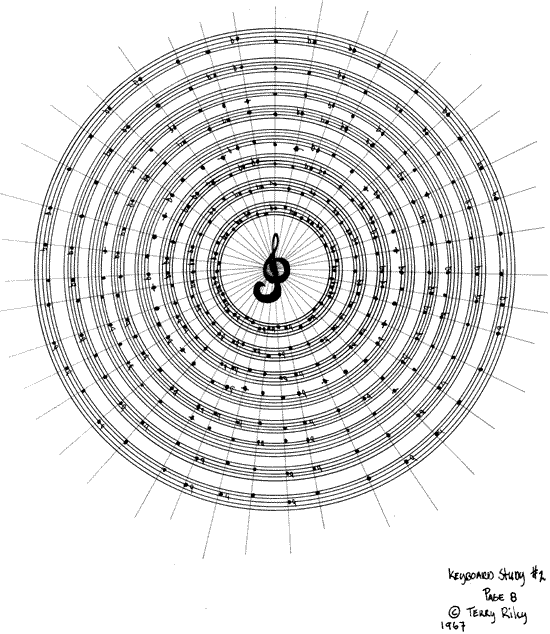
The Terry Riley celebration began with a recorded message from Terry himself, who at 90 years old could not make the trip to Los Angeles from Japan. Vicky Chow walked onstage to perform Keyboard Study No. 2, an ambient wash of layered piano figures gently percolating through the amphitheater as fog filled the stage. After a (maybe bit too much) time, the piece concluded and the remainder of the All Stars joined Vicky on stage with the notable exceptions of Chris Lightcap on bass (just 5 days behind Lizzie Brightburn’s official announcement as the All Star’s new bassist, replacing Robert Black who passed away in 2023) and Gyan Riley on guitar, not replacing Mark Stewart on any permanent basis but here to lead the ensemble in the west coast premiere of his arrangement of A Rainbow in Curved Air.
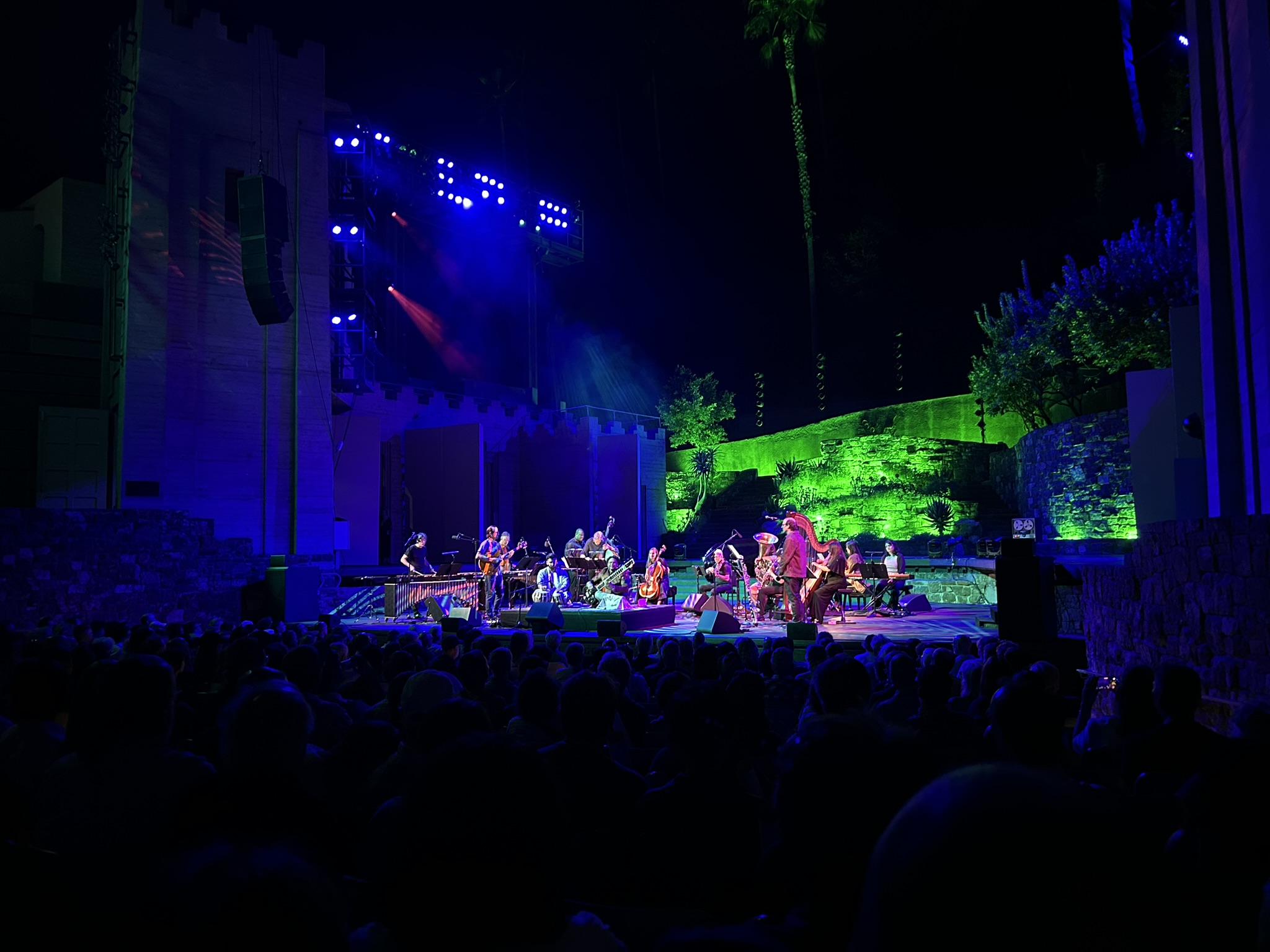
As the A-side to arguably Terry Riley’s most well-known record, the expectations were high for a mostly-acoustic reimagining of A Rainbow in Curved Air, and Gyan’s arrangement deftly navigated the space between faithful interpretation and creative liberty. The ever-present synth organ line laid a bed for florid melodies – some from the record, some imagined on the spot. The instrumentalists took turns contributing to the motoric texture as others soloed above them.
Then a bevy of musicians joined onstage from many corners of the Los Angeles music scene; Jeff Gauthier, primarily a jazz violinist, sat a stone’s throw from sitarist Rajib Karmakar and drone music stalwart Sarah Davachi, brought together by the generous spirit of Terry Riley’s In C, undoubtedly his most well known composition. Built in 53 cells with the instructions “all performers play from the same page of 53 melodic patterns played in sequence,” the composition allows for any number of any pitched instruments to perform.
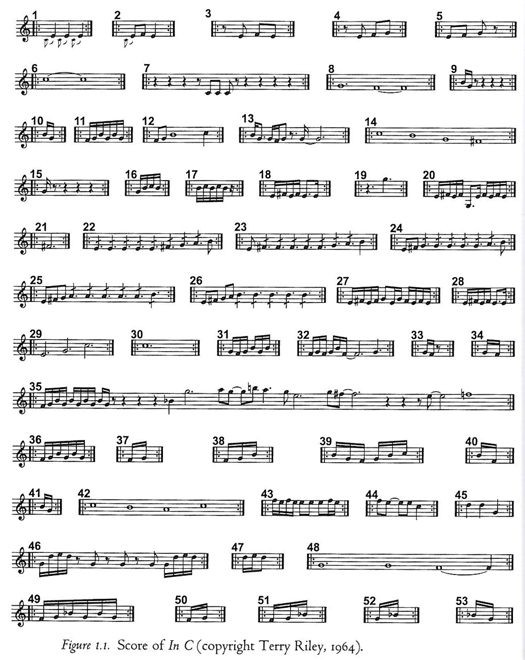
The group chose to delegate the suggested eighth-note beat-keeper role to any member of the ensemble, a time keeping measure made common practice, apparently, at the suggestion of one Steve Reich. What I had thought were smartly planned dynamic structures turned out to be spontaneous collaborative decisions; speaking to Ken Thomson (from the All Stars) after the show, I learned that the rehearsal for the piece was rather short – there wasn’t even time to run through a performance of the piece. They went over some key points, checked mics, and that was it. What happened on stage was the first time that these musicians had actually gone through the piece in its entirety. Big ears across the stage ensured that the musicians took and gave space, and moments of incohesion were brief and scarcely noticeable.
I’ve heard the thought that In C is only fun when you’re playing in it, which isn’t necessarily untrue; when I attended the Bang on a Can Summer Festival in 2024, the first day of activity began with a group performance of In C. Performers, composers and All Stars alike took part in a reading of the piece with no planning; sheet music was placed on stands, mallets were handed out, and we played. This piece lays the blueprint for the kind of exploratory, easy-to-put-together composition that allows for improvisation-on-rails, and couches mistakes in the comfort of playing in a large enough ensemble that surely no one heard you play a B natural instead of a B flat. For this reason, I’ve also seen performances of In C that are unfortunately lazy; the very nature of its ease of performance makes it a great candidate for a last minute concert filler that requires little to no preparation, which can come across as a lack of respect for the material (this also happens with Pauline Oliveros, in my experience). In C is used as a corporate icebreaker etude as much as it is for concert performances, so you’ll understand my trepidation at being seated for yet another hour-long performance of a piece I’ve seen repeatedly programmed to the cross the proverbial finish line. Luckily, the quality of the musicians onstage, and perhaps fueled by the low simmering anxiety of never having properly rehearsed the piece together, produced a generous and dynamic version of In C as I could have hoped to have seen.
A few days later, I went to see Sharon Chohi Kim’s Murmurations at REDCAT, a piece for four voices, electronics, and projection that employs the dual meaning of the title: “both spontaneous flocks of starlings and a collection of low, continuous sounds.” Sara Sinclair Gomez, Molly Pease, Kathryn Shuman and Chohi herself began draped underneath a large cloth, from which the titular vocalizations emerged, and over which was projected shifting grains of sand (created by Jennifer Bewerse). Over the course of the piece, the projections would employ the topology of the cloth to create three-dimensional images of tide pools, flowing rivers, and mountains. By the end of the show, the cloth had found itself wrapped around Chohi, clearly evoking the picture of a gingko tree.

The virtuosity of the four singers was evident not only in the wide (octave) range they traversed, but also in the nearly 60 minutes of material they performed from memory. Though some movements of Murmurations were functionally guided improvisations, much of it seemed to fully written, which, combined with staging and choreography (Stephanie Zaletel), was no small feat of preparation. The projections by Jennifer Bewerse made use of the morphing surfaces beautifully, functioning at times as set dressing, prop, costume – or all three.
The conception of the piece is abstract; though there are clear themes of nature and ecology (water, sand, birds), nothing is explicit enough to suggest a message (perhaps an environmentalist one?). Gingko leaves have a prominent place in the piece, but to what effect? The ‘art’ of the piece is successful enough to survive on its own as a purely aesthetic (‘absolute’) experience, but its usage of identifiable ‘nature’ imagery seems to point to a narrative that it hasn’t created yet. I’m not so bold to say that art needs to have a readily identifiable “meaning,” but this seemed like it was asking for one.
I noticed that both of these events were held at venues operated by the Los Angeles Philharmonic (or, at the very least, housed in a Philharmonic building). Artistic control of the Ford Amphitheater was transferred to the Los Angeles Philharmonic in 2020, and REDCAT is housed inside of the Walt Disney Concert Hall, built alongside the main hall, both designed by Frank Gehry. Maybe this is idealistic, but what I optimistically see here are the Classical powers-at-be continuing to provide resources and funding to the younger, hard-to-categorize artists like Chohi, and to the experimentalists of yesteryear in Terry. Anything less than Tchaikovsky at the Bowl or Beethoven 9 at the Walt Disney won’t really make any money for the Philharmonic, and the continually looming threats (and actions) of the current administration to cut arts funding (amongst the lower impact of its atrocities) never ceasing; at the risk of sounding grateful for scraps, seeing the big dogs continue to support new / contemporary music is a win in my eyes.
DOG STAR ORCHESTRA FESTIVAL 21
There were sixteen (16) events held in the Dog Star Orchestra Festival over ten (10) days in the summer of 2025. Of those, I watched, listened to, or otherwise participated in thirteen (13) of them; you would think that gives me a uniquely qualified perspective to speak on the festival as a whole, but it turns out that a large percentage of this audience are diehards for the kind of quiet, post-Cagean music fostered (in large part) by Michael Pisaro at CalArts – several of the audience members were there for every single event.
The Dog Star Orchestra is an ensemble and a once-a-year festival of experimental music, started in 2005 by Michael Pisaro as a way of playing recent experimental music by young composers and classic pieces from the experimental tradition. Described as “messily exceptional” by the Los Angeles Times, Dog Star events happen throughout the Los Angeles area and often feature offbeat performances in out-of-the-way places, alongside more traditional concert settings. It is one of the main presenters fostering and documenting the strong local experimental music scene, as well as presenting work that would otherwise not be heard in the US.
The festival has also featured the US premieres of many works by the international Wandelweiser collective and presented seminal pieces from the American origins of the experimental school (Cage, Wolff, Feldman, Lucier, Oliveros, Tenney and so on). Initially curated by Pisaro alone, the summer festival grew from six concerts to, in 2015, fifteen concerts. Beginning in 2011 the festival began to employ multiple curators drawn from people who had participated in previous years. In most years upwards of 60 musicians participate as composers and performers. The local following for the series has also grown substantially over the twenty years of its existence.
Some of my highlights are collected below, with the notable exception of the IN REAL TIME review which is written by Violet Hill.
Jun 14, 2025 5:00 PM – WALL PIECE – LA Valley College, music school
A small ensemble will treat the west-facing wall of the LA Valley College practice room building like a graphic score and Erik Carlson will begin his solo violin piece, “Dog Star Palindrome.”
Michael Matsuno teaches at LA Valley College, and every time he enters or exits the music building, he passes by this wall, noticing its asymmetry, palette of colors and textures:

which naturally became the score for the faithfully-titled “Wall Piece”:

a performance of which was realized by a small ensemble facing the wall; the audience could choose to situate themselves anywhere. Some faced the ensemble, others chose to face the wall in tandem with the performers, as if reading along.
A composition like “Wall Piece” is predicated on a certain amount of rigidity; the score is derived from lines and shapes on a preexisting plane, and for a composer to adjust their whims would sacrifice accuracy to the original art which, depending on who you ask, is the entire point.
The success of this piece, then, lies in the details; Michael’s orchestrational decisions and the performers’ interpretative decisions compound to elicit a cohesive long-form work (clocking in at exactly an hour from the left edge of the wall to the bricks comprising the box office booth).
As of the time of the performance, the architect of the building is unknown to Michael. And, believe it or not, the design is at least partially functional; the blue sections are windows into practice rooms and faculty offices. At certain points, as Michael was measuring the walls, he’d accidentally look into one of the windows and someone’d be looking back.
Jun 20, 2025 8:00 PM – A YEAR OF DEEP LISTENING – The Battery Books and Music
readings and performances from “A Year of Deep Listening”
A series of short performances of pieces from “A Year of Deep Listening,” a collected anthology of text scores in tribute to Pauline Oliveros. My favorite was “Yeehaw * 9” performed by Mason Moy and Cassia Streb; you can probably guess what the said, nine times.

Jun 21, 2025 7:00 PM – PLACES – private address
A 24-hour installation composed by Todd Moellenberg.
in which audience members could enter Todd Moellenberg’s residence at any point during a 24 hours period to play on his piano, specific keys illuminated by a wall mounted projector based on scales derived from Markov chains. According to Todd, there was a performer seated at the piano for the entirety of the 24 hour period.

Jun 26, 2025 7:00 PM – NEAR FIELD #1 – Automata (basement)
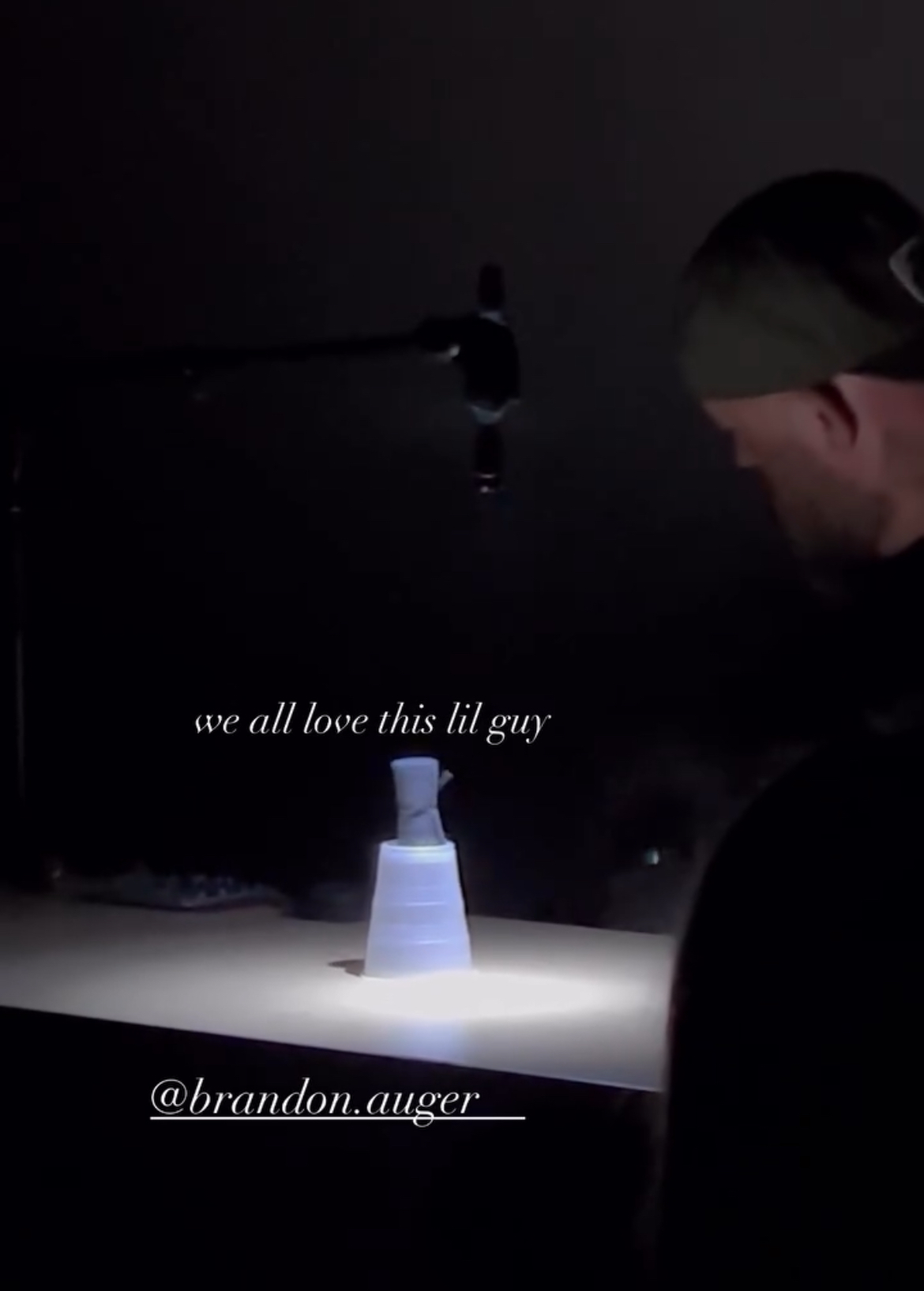
Brandon Auger performs a proximity-based listening event
many motor-driven sound making objects on a table in the basement of Automata; this little roll of felt spun around with its arms raised and captured my heart
Jun 28, 2025 4:00 PM – IN REAL TIME – Automata
Three abstracts from Automata (by Violet Hill)
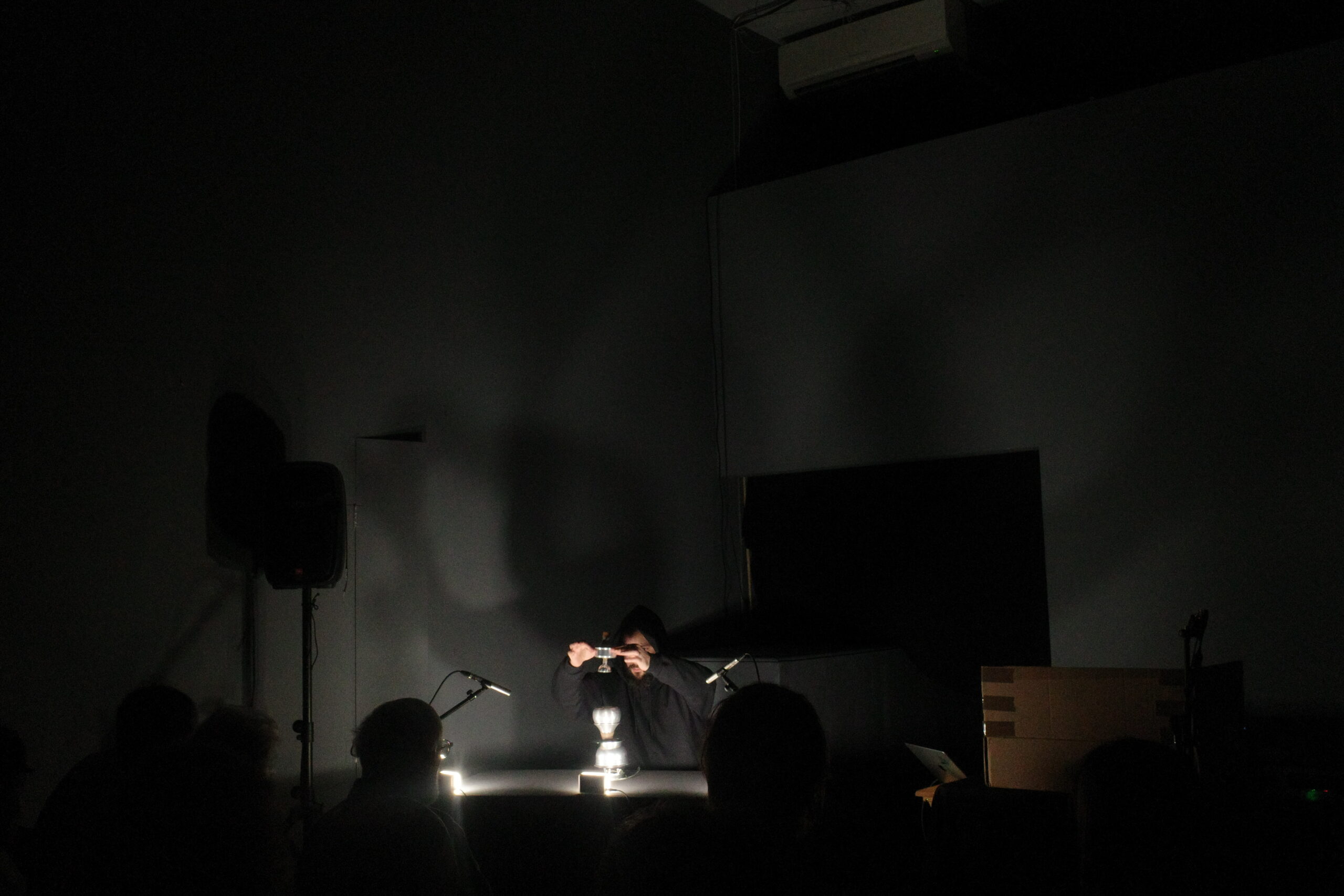
“On Nev Wendell” – automatic impressions & granular gestures inviting sweet moments of clarity between pause & pondering…the tickle of the ear, rustling of leaves, and quiet hum of the mechanized world – a truly wonderful absence of urgency
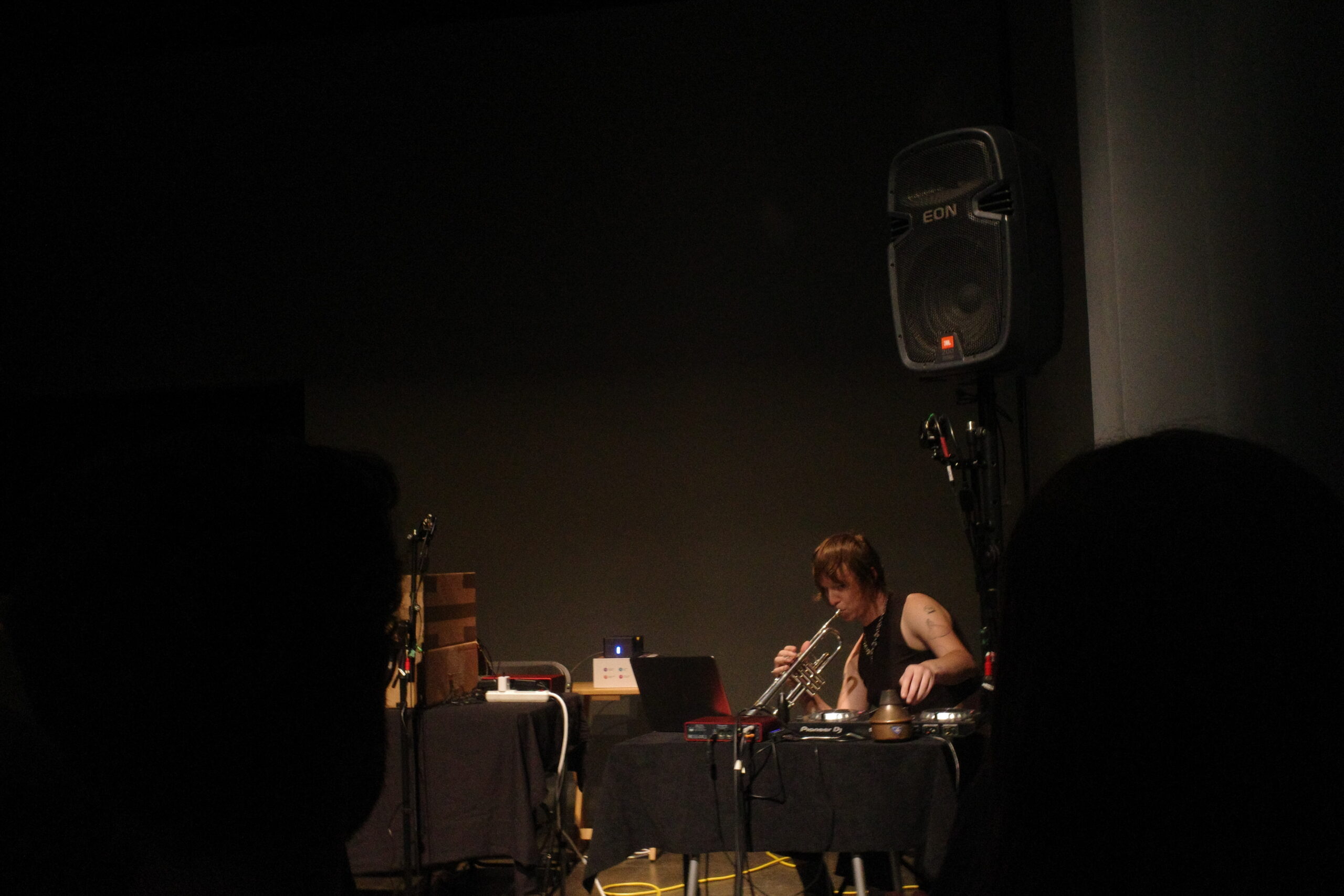
“On Ethan Marks” – tunnel vision (enlightened) through the obsessive conjuring of events, one after the other. a brilliant refusal to acquiesce. a dedication like no other. tension is officially in season, and its inevitable tides can be observed through glimpses into the window of dark arts
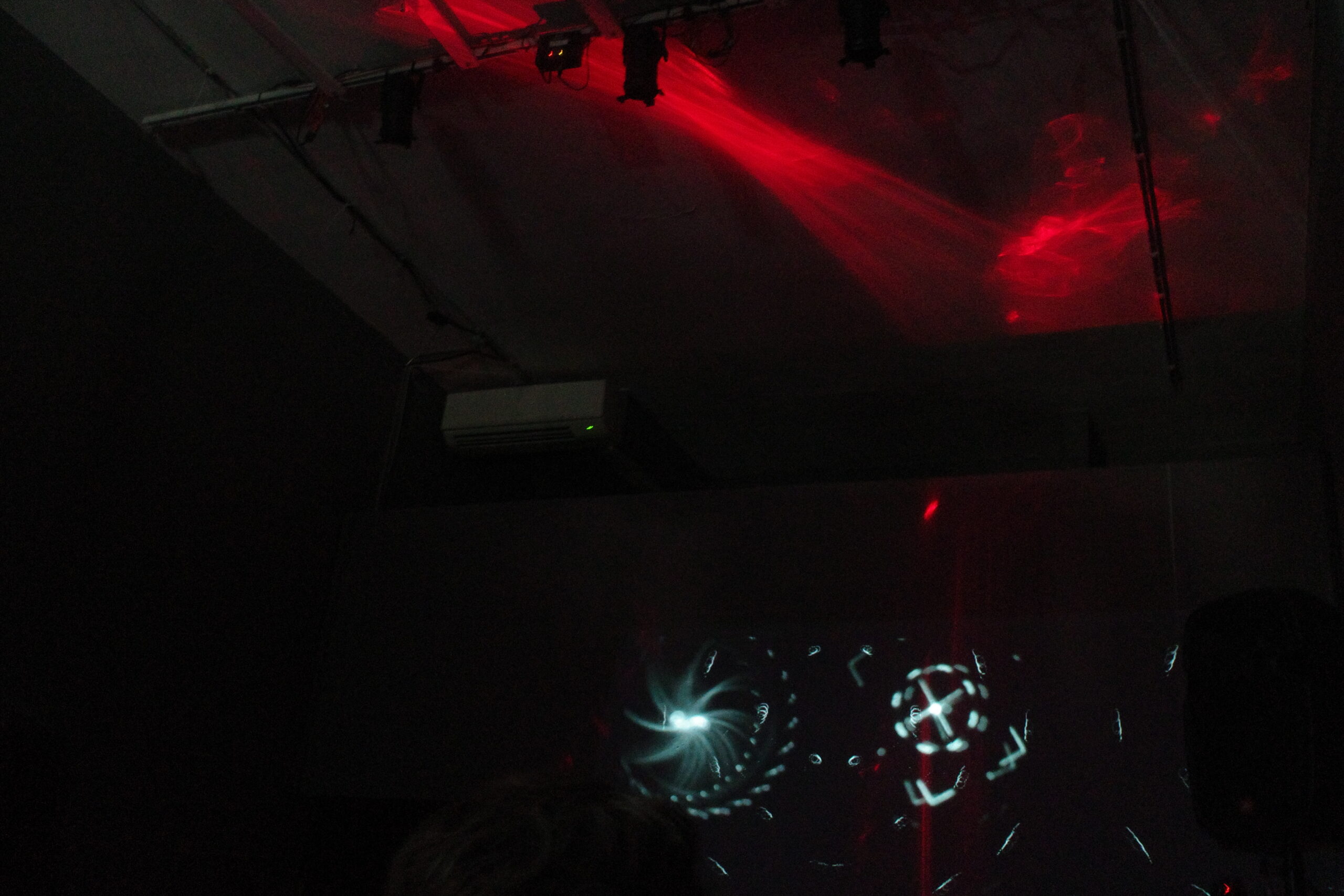
“On āññā” – mechanical voices from within that challenge perception of free will. red laser lights distract and hypnotize. visuals are far from processed feelings, rather, they evoke guttural reactions. do they serve to prompt an inquiry of matrix or are we asking the wrong questions?
Jun 28, 2025 8:00 PM – AGAIN AND AGAIN – Automata
A work by Jules Evans and the Dog Star Community Choir performs rounds from Larry Polansky’s Rounds Unbound
I co-directed the second half of this concert so I won’t say too much but what a joy it was to sing rounds with a group of volunteer / mostly-amateur singers. A photo of us at rehearsal in my studio because I was too preoccupied making music to take photos at the venue (I hope Larry would be proud of me):

Jun 29, 2025 8:00 PM – THESE ARE MY FRIENDS – Automata
Compositions by Nat Evans, Jen Boyd, Anna Heflin, Ben Rempel, TJ Sclafani
One major change in the festival this year was the quality and reliability of the livestreams provided by Dog Star, through the work of videographer Chris Lascelle and audio engineer Colbert Davis. Every performance in the Automata Theater was captured and live broadcast so that those unable to attend could still watch; I was unable to attend in person, so I would not be able to tell you about Ben Rempel’s percussion trio, a luminous highlight of the day featuring Tim Feeney, Don Nichols and Ben himself. The work vacillated between modes of togetherness; at times chaotic, at times synchronized, but most frequently somewhere in the middle.

This festival is staffed by volunteers who produce the beautiful-if-unmarketable music through sheer grit. Congratulations in order for every performer, composer and staffer but especially head honcho Cassia Streb for pulling it all together.

Stay tuned for the next season.
Tyler Eschendal’s ACTIONS

This past weekend, composer / percussionist / videographer / music technologist Tyler Eschendal (together with director Diana Wyenn) presented ACTIONS, a multimedia one-man show with five primary sections named after “actions” – Arguing, Acting, Singing, Ordering, and Explaining (which can be viewed as a video series here). These movements and their corresponding actions relate to Tyler’s stutter, about which he says:
“For many years, I chose not to make music around my stutter because I didn’t understand it. I was concerned about sharing it with others because alongside harmful tropes often portrayed in media, I primarily identified as a covert stutterer: someone who purposely omits or substitutes words to avoid stuttering. I felt disconnected from the biggest constant in my world. Although the original goal of the short film series was simply to better understand my stutter, this live adaptation presents the opportunity to connect to other people who stutter across Southern California and rebuild the narrative around stuttering.”
Throughout the work, “what does it feel like to stutter” recurs as a motive; in between movements, pre-recorded video excerpts describe situations in which Tyler’s stutter interfere with his daily life, some that had never occurred to me (ever get annoyed at a robot phone operator because they can’t understand you?). Some of the “actions” describe situations that might inspire terror in a person with a stutter; “Ordering” combines the fear of stuttering and the terrors of not knowing what you want to order into a collection of nervous tics, in a work reminiscent of Thierry de Mey or Tom Johnson. Other sections describe the mechanisms one might use to circumvent their stutter, like rhythmicizing their speech to the covert drumming of their fingers. But ultimately, the 50-minute show ends with a cautiously optimistic acceptance of self, and of the stutter as part of one’s self.
There’s a lot that can go wrong in live performance. Your Max patch could fail, your spike marks on the ground goes missing, or your wireless mic pack’s batteries die after a long dress rehearsal, and not to mention all the ways in which you could fail as a performer. Lines misremembered, mallets dropped, cues missed, notes gone; I was happy to see that this performance was as smooth and well calibrated as it could have been, especially one of this size and scope. Each movement performed without a hitch, nearly all memorized, and which involved a dizzying number of the “things that could go wrong;” an overhead projector, live audio processing, live video processing, looping, percussion on ceramic tiles. All pulled together to form not only a musically variegated composition, but also a giant feat of coordination and memorization.
I thought about Tyler’s stutter as he moved away from his first percussion setup and began monologuing. I wondered how his stutter could affect his monologue, then wondered if I should be thinking about that at all. I thought about “fluency” and its hegemony, which must mean that anything else is a failure, right? I thought about all the times I instinctively “helped” when it really wasn’t the right thing to do. In the final movement of ACTIONS, a Tyler drenched in vocoder delivers a final monologue, conflating speaking with a stutter as a “performance” and any action as “performing as yourself;” this was the gut punch that racked everything into focus. It informed the preceding 40 minutes, gave it new meaning, and extrapolated existence itself as a performance. Tyler’s understanding of self turns a technically perfect performance into an emotionally virtuosic one. Not only does ACTIONS answer “what does it feel like to stutter,” it challenges us to think on what it means to be human.

Presented by Synchromy, Music and Theater tell the story of life with a stutter in the premiere of Tyler Eschendal’s solo show ACTIONS.
Tyler Eschendal, Percussion and vocals
Diana Wyenn, Director
Elliot Menard’s UMBRA

CONTENT WARNING: SUICIDE
A few weeks ago, LA Times classical music critic Mark Swed wrote about the surfeit of successful smaller scale opera productions that swept Los Angeles in February, including programs by The Industry, the LA Opera, and Long Beach Opera. I’m willing to bet, had he attended, that he would include last weekend’s production of Elliot Menard’s UMBRA at the Highways Performance Space amongst living proof that “intimacy replaces grandeur. Smaller budgets allow for bigger ideas. There is room for experimentation, immediacy and risk. Such opera can be done pretty much anywhere, indoors or outdoors, and pretty much anything goes.”
Elliot Menard’s UMBRA is an adaptation the Orpheus myth; as much is made clear in the first act where, immediately following an overture, the as-yet-unnamed Elliot sheds headdress and garb to reveal a plain black outfit, where she reveals (in the only English for the duration of the work) that, though everyone knows the story of Orpheus and Eurydice, what happens afterwards is not often considered. It is also revealed here that the myth allegorizes the story of Elliot’s childhood friend, who passed away at the age of 20 from suicide.
From here, the singers and ensemble (flute, cello, occasional electronics and pianist doubling as conductor) launch into an hour of nearly continuous music, which precipitates one of my only complaints about the production; it is difficult to understand the nature of each of the five or so sequential opera chorus movements when they’re presented one after another. It’s a well-known feature of the opera form that a moment in time can be suspended as long as is musically necessary, after which a resumption of plot could be expected; as UMBRA continued and continued and continued, the programmatic connection to the Orpheus myth became less clear, whether with intent or otherwise. I do partially chalk it up to my own lack of familiarity with the L’Orfei of antiquity, but I figure the lack of supertitles or translated text in the program notes would make it difficult for most patrons to follow. As the piece develops in subsequent productions, I could see it pull towards either direction; give us a chance to understand what each song / scene represents in the Orpheus myth, or swing even more opaque and do away with the introduction entirely. There’s nothing wrong with adapting the story with ambiguity, but to preface the show with “this is the Orpheus myth and it’s also about my friend” may ask the viewer to clue into aspects of a plotline that isn’t represented in an obvious manner.
As promised, that was my primary complaint with UMBRA; the music is well composed and tightly performed (with a staggering portion of it memorized by Menard herself), and the spare materials are smartly utilized. Microphones stands emerge from the curtain as props before they’re plugged in to amplify the chorus – the flautist at one point dances around the stage (while still playing) before retreating to the corner – a ceremonial cloak, once disrobed, is used as a rug for the next scene – both flute and cellist adopt percussive roles to replace a percussionist proper. As far as low-budget opera productions go, it’s hard to imagine it getting much better than this. With a small team and tight quarters, Menard and team manage to pull off an admirable feat – a tightly produced and beautifully performed work.
Umbra is developed in collaboration with and directed by Héctor Alvarez. This staged workshop production also features the work of music director Daniel Newman-Lessler, associate director and producer Rory James Leech, costume designer Ashley Snyder, assistant costume designer Nishtha Tyagi, lighting designer Claire Chrzan, and performers Nelle Anderson, Isabel Springer, Carmen Edano, Shannon Delijani, Karolina Kwasniak, Livia Reiner, Emma-rose Bauman, and Marly Gonzalez.
https://www.highwaysperformance.org/events/umbra-2025-03-22-20-00
newclassic monthly #6: past, present, future
if these photons are hitting your eyes, chances are you’re an angeleno, an artist, and someone who’s been somehow affected by the recent fires in Altadena and the Palisades. hopefully you’re reliably housed, employed, and unharmed but there are too many friends for whom that is not the case. i’m leaving links at the bottom of this write-up for folks in our community who still need our help.
A LOOK BACK

after an initial wave of immediate cancellations (from venues as small as the Sierra Madre Playhouse and as large as the Walt Disney Concert Hall) concerts series cautiously came back to life in late January as we began to readjust to life post-disaster. Monday Evening Concerts, which postponed their mid-January pair of Steve Schick performances (part of a season-long partnership celebrating MEC and Steve’s 85th and 70th years of existence, respectively), began their 2025 with a premiere by Tyshawn Sorey. Tuesdays @ Monk Space postponed their January Wendy Richman / Alex Elliott Miller show for later this season, and began the year proper with the music of Wadada Leo Smith in February.
Long Beach Opera‘s season-long exploration of Pauline Oliveros kicked off with EL RELICARIO DE LOS ANIMALES at the Heritage Square Museum.
Trade School, a new venue in Altadena, survived the fires but has had to shut their doors temporarily to smoke remediate, and relocated their February events to Oracle Egg and RASP. Tapetail also moved events to Oracle Egg before returning their usual home at Automata.
A LOOK AT MARCH

the calendar has been updated with all the usual suspects’ March events (if you don’t see yours on there, submit here). of particular note are the series of Julius Eastman and Arthur Russell performances at the Walt Disney Concert Hall and REDCAT.
Chat Pile’s coming to Zebulon and clipping‘s new album comes out mid-March if your proclivities lean that way. Other records you can pick up (some in time for Bandcamp Friday) include Wovenland 3, Curator of Domestic Life, Reflex City Mangling, The Music of Anthony Braxton (by Steve Lehman), Parlando, SOVT, Pictures of the Warm South, Polsky West, and a special Women of Noise release for wildfires relief (check instructions in description, donate don’t buy. thanks Kevin, Jack and Matt). I’ll throw my own music in here, Ben Richter’s Dissolutions Seedlings released in January on Sawyer Editions (thanks Kory Reeder).
you may be stoked to hear Edition Wandelweiser has begun a digital migration to Bandcamp, also thanks to Kory Reeder. EW has not had a reliable digital streaming/purchase option (the records you’d find online were uploaded by the artists themselves, not the imprint), so this is a big deal for lots of us.
A LOOK FORWARD

the Ojai Festival just put its Series Passes up for sale (this year directed by Claire Chase). the Big Ears Festival, though not in Los Angeles, is this month and features too many musicians in the purview of this publication to name, and is the only festival of its type that I know of. TIME:SPANS (in New York in August, line up announced in April) is similar in size but not in scope.
both the Dog Star Festival and High Desert Soundings have opened and closed their submission windows, boding well for their summer and fall activities (again, respectively). the HEAR NOW Festival begins at the end of this month, opting this year for three concerts, one concert a month.
also wanted to shout-out Synchromy as a place to share new music events every month, and Mel’s List for Melissa Lai’s own list of events (we have a narrow overlap of events, so go check them out to expand your interests).
FROM THE EDITOR (NO ONE ASKED)

my last two months were strange; immediately before evacuating my home in Pasadena during the Eaton fires, i drove to my studio and grabbed my computer, every hard drive with old concert footage, my shimedaiko (the most expensive instrument I could carry in one hand) and the bars off my vibraphone (my most recent large purchase). i stayed at my dad’s for a few days, without power, then returned to Pasadena. i showered when the city advised us not to use the water (we’ll see the ramifications of that in a decade or so i guess). my home and and studio were safe, but the Pasadena Waldorf School, where I’d worked as Percussion teacher and occasional Choir accompanist, lost their primary campus.

i took a day trip to san diego to see neko3 at UCSD; on the way a rock kicked up behind a truck and hit my windshield, spraying bits of glass onto my clothes, creating a tiny hole through which you could hear the air whistle.
two weeks later, the historic rainfall in LA caused the perfect conditions for cars on the 134 to hydroplane and spin out, one of which was mine. i hit a pillar, somehow avoiding both personal bodily harm and hitting anyone else. my car was in the shop for a week, after which I drove without a functioning seatbelt for another week while they found a replacement belt. i wore a cross body bag across my shoulder to ward off anyone on that side of the law.

somewhere in the middle of all this, my students from the Pasadena Waldorf School, for having lost their campus in the Eaton Fire, were tapped to sing at the Grammys for the Quincy Jones tribute. serendipitously, the Palisades school selected was the Palisades Charter High School, whose choirs are directed by my friend Allison Cheng, where I’ve guest lectured on electronic music / recording engineering, and for whom I’ve written two pieces.

during these two months, i attended events by Monday Evening Concerts, Piano Spheres, KODO at the Walt Disney, Automata @ Oracle Egg, Trade School @ RASP, Mingjia Chen + NOW at 2220, Tapetail back at Automata, Tonality + Kronos at the Wallis and some I’m likely forgetting.
sometimes it’s a drag going out to events and though i’m typically allergic to the kind of saccharine togetherness spiel that usually goes where this sentence currently exists but i had to admit it was nice feeling a sense of community after all that happened to us.
please submit your events to our calendar
🍉
please donate to:
Erin Barnes, Nic Gerpe and Juhi Bansal, An Perry, Steve Lehman and family, Bobby Bradford, William Roper, Bennie Maupin and family
nc.la at Noon 2 Midnight

As luck would have it, at least three of our writers independently ended up at the LA Phil Noon 2 Midnight marathon festival last weekend, and a fourth (Violet Dream) performed as part of the Isaura Quartet (my favorite complete set of the day). Huge congrats to Violet, and here are some of our highlights:

Richard An: Vicki Ray has known and worked with Annea Lockwood for decades, and it is perhaps due to that familiarity that produces an intense, fiery performance of Lockwood’s Jitterbug, with a skillful combination of intention and ease. Wesley Sumpter was once a Resident Fellow at the LA Phil and now performs regularly with the orchestra as a de-facto member of the percussion section; at scarcely 30 years old, Sumpter steps up to the task of matching up with these two fixtures of new music in Lockwood and Ray. A luxurious field recording of natural sounds provide a bed of material on top of which Ray and Sumpter are free to trade gestures. A masterful performance, and my favorite of the roughly 6 hour span that I was present.

Jack Herscowitz: Among the highlights of the day was saxophonist, composer, and producer Josh Johnson’s solo set for saxophone and electronics, Unusual Object: which shares the same name as his most recent solo album. Johnson’s prodigious playing and pedalboard mastery commanded the attention of the entire lobby, stopping departing concert goers (from the recently finished Doug Aitken, Lightscape premiere) dead in their tracks. The smile and awe painted on my face throughout Johnson’s set is a testament to the magic that everyone in that room surely felt. And that delicious harmonizer pedal…

Anuj Bhutani: I’ve wanted to see Pan-Afrikan Peoples Arkestra for a long time, and seeing them close out the main stage felt like the perfect first experience, as their very presence on the stage felt poetic after the day’s programming. From the very first solo to the riotous ending with the entire audience clapping along with the on-stage dancers, PAPA had the audience totally enraptured.